
Pull-Up Bar H2 for Steel Beams




Prices incl. VAT plus shipping costs
Delivery time 14 Workdays
- Einfache und schnelle Montage
- Robust und pflegeleicht
- Rutschfestes Material


- Order number: 00H2-1200
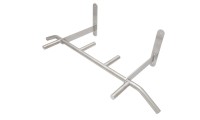
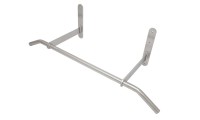
Pull-up bar H2 - with 2 additional grips for a steel beam: A robust pull-up bar for pull-ups, calisthenics, bodyweight exercises, core workouts, and sling training.
General Information
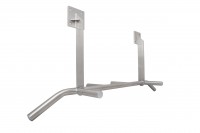
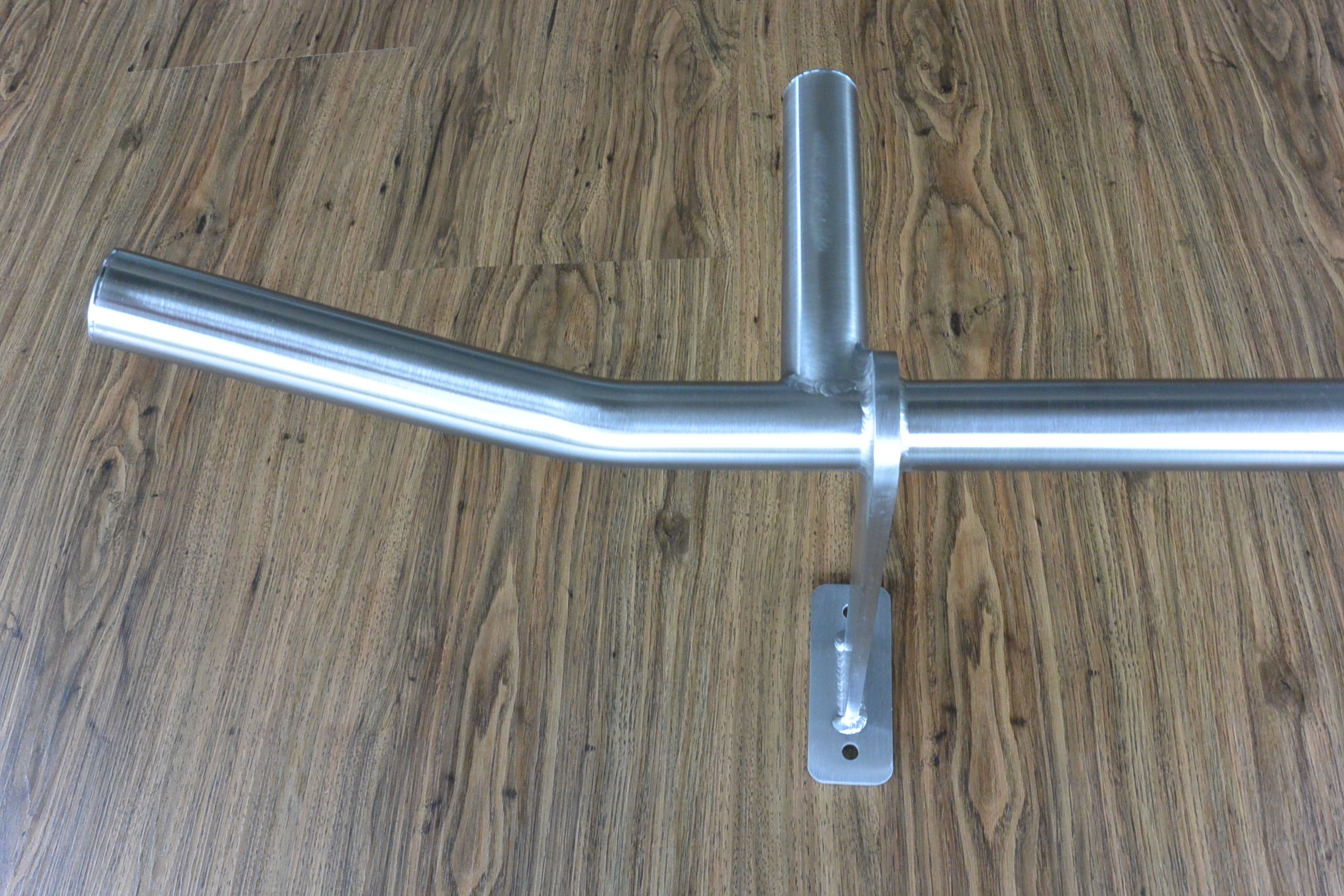
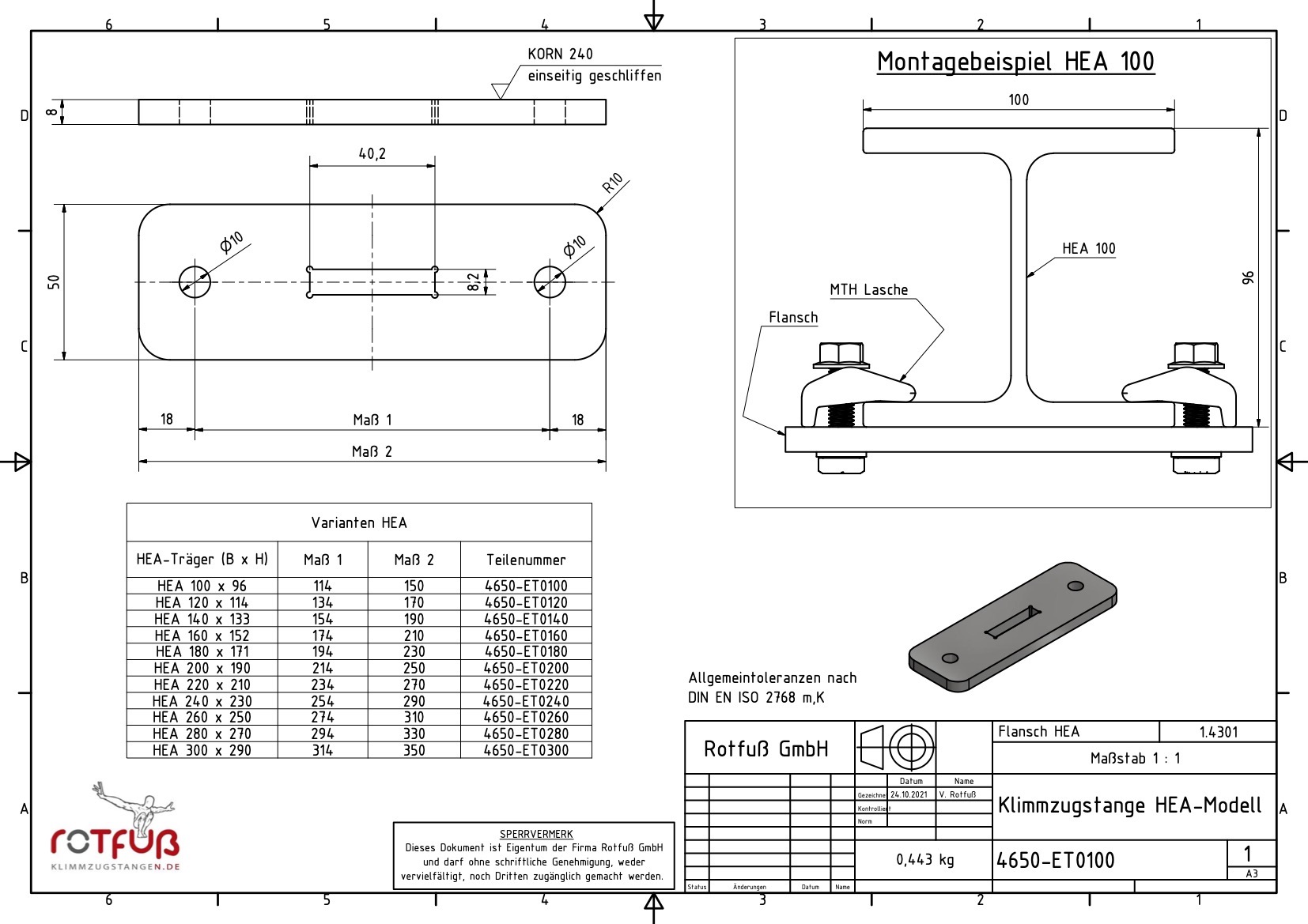
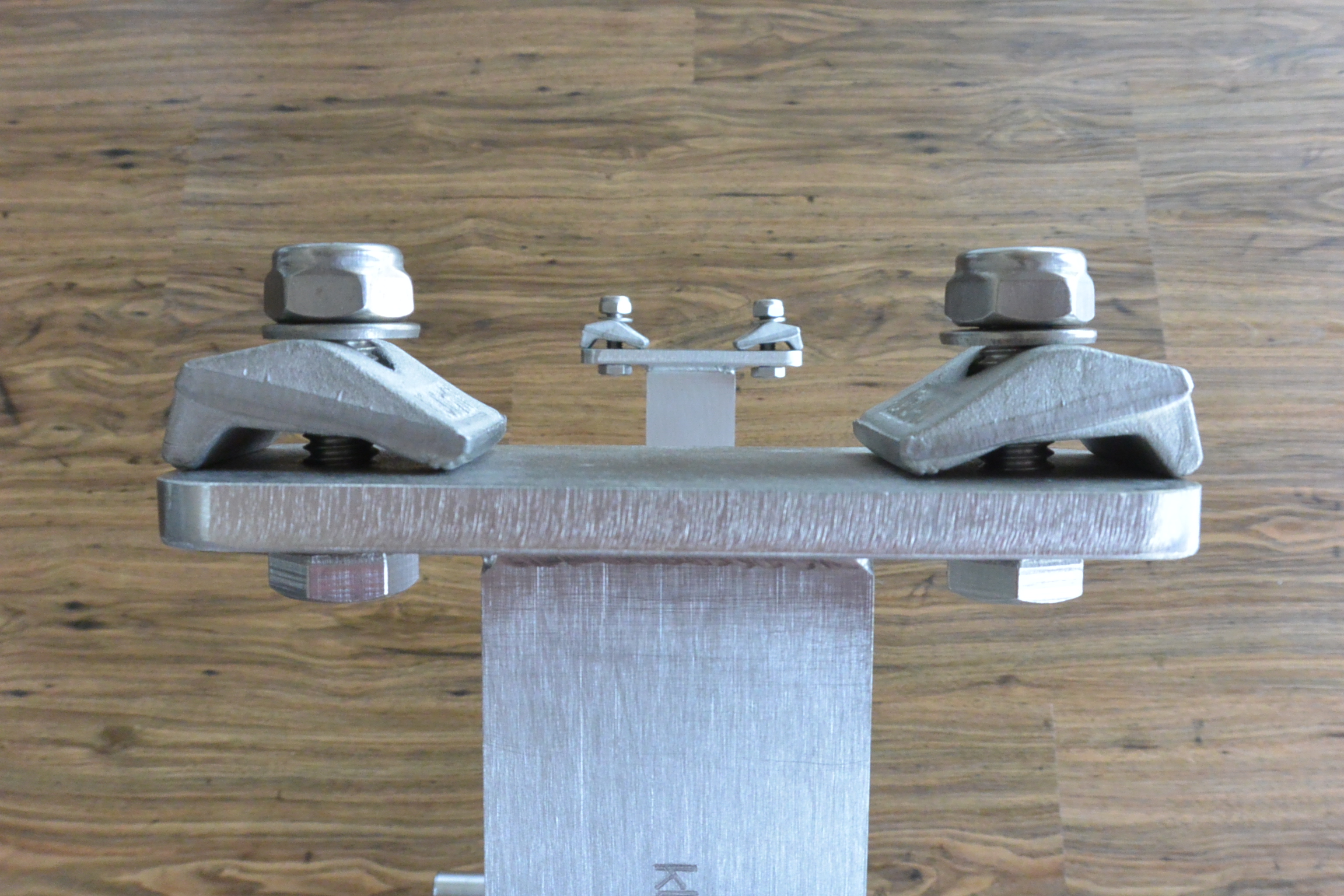
The pull-up bar H2 is designed for mounting on a steel beam, making it suitable for both indoor and outdoor use. The installation is carried out using original stainless steel MTH clamping plates. This fastening technique eliminates the need to drill into the steel beam and prevents any rust issues at the mounting points.
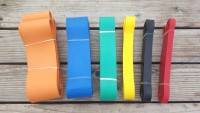
Once secured with the MTH clamps, the pull-up bar H2 is just as versatile and expandable as the ceiling-mounted model. For instance, the pull-up bar H2 can be excellently combined with resistance bands and sling trainers.
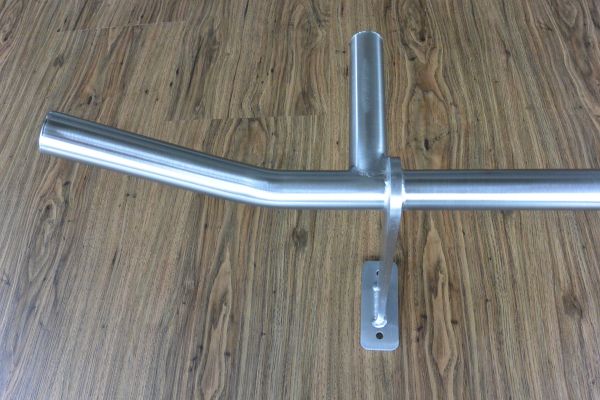
With a grip width of almost 1.2 m and four grip variations, it is perfectly suited for any fitness training. The surface is brushed, providing excellent grip. Technically, it is fully welded, made of stainless steel, minimalist, and extremely stable.
Mounting
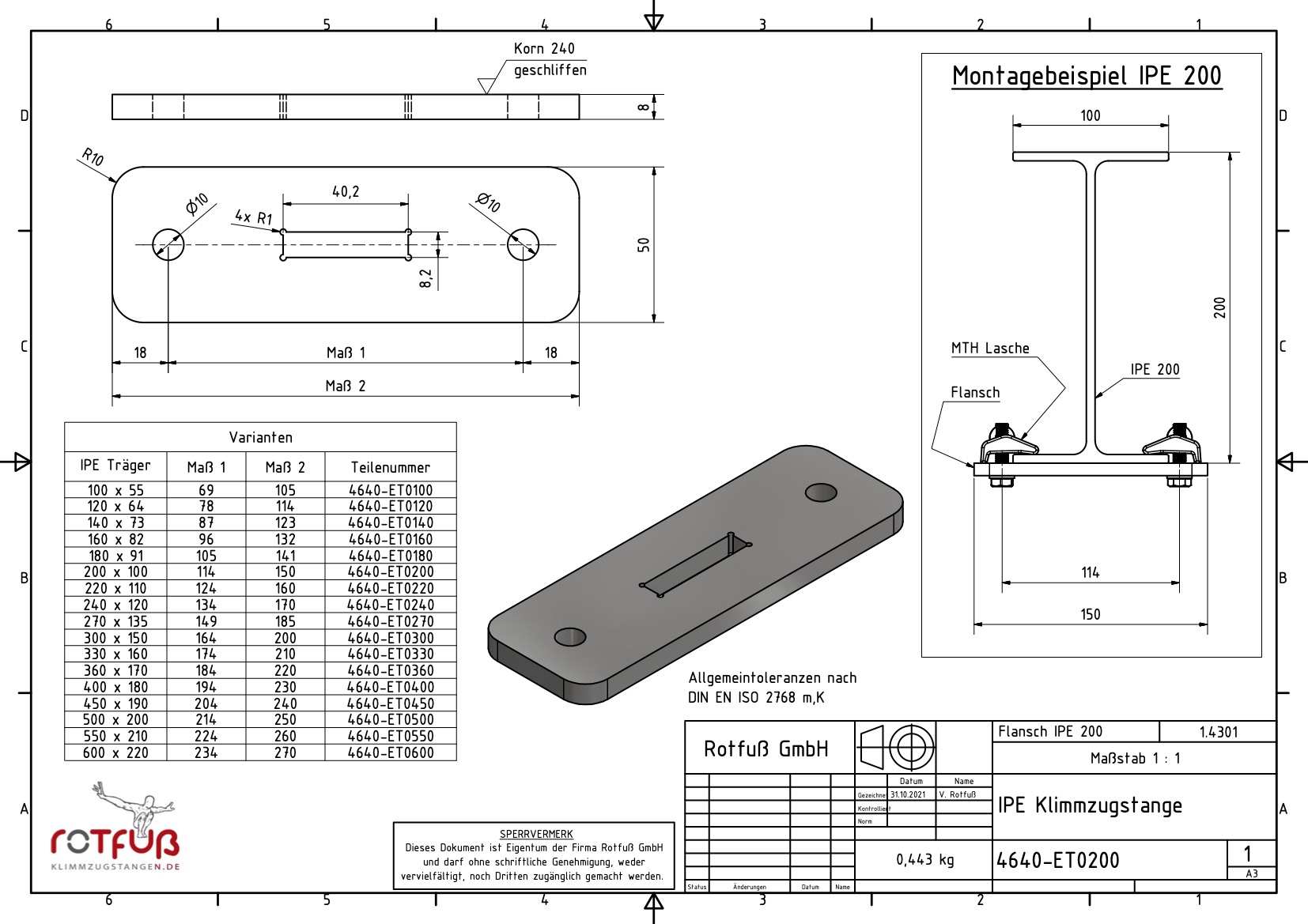
When placing an order, the correct flange width of the steel beam must be selected. This requires measuring the contact surface of the steel beam prior to ordering to ensure the correct width is chosen. Please note that the pull-up bar H2, along with the matching mounting plate, is manufactured with millimeter precision for the specific steel beam. Therefore, careful consideration is advised when selecting the dimensions. As a custom-made product, the pull-up bar is excluded from exchange and returns.
The pull-up bar H2 can be attached to the following steel beams using the MTH clamps: H-beams, double-T-beams, IPE-beams, PE-profiles, HEA (IPBl)-profiles, HEB (IPB)-profiles, HEM (IPBv)-profiles, I-profiles, and INP standard double-T-profiles.
Suitable for the following workouts
Fitness training, calisthenics, bodyweight exercises (full body workouts), CrossFit, and sling training.
Suitable for the following training sessions
Pull day, upper body, core.
Possible exercises
Classic pull-ups (4 grip variations): wide/medium/narrow, in overhand, underhand, or parallel grip (pull-ups, chin-ups, neutral pull-ups), burpee pull-ups, leg raises, L-sit pull-ups, front levers, back levers, negative pull-ups, neutral pull-ups, and one-arm pull-ups.
Suitable for the following muscle training
Training of the upper body muscles (core), chest, arm, back, and shoulder muscles (BARS muscles) as well as the abdominal muscles.
Advantages
-
Secure mounting on a steel beam without drilling
-
Highly suitable for pull-ups and similar exercises
-
Offers ample clearance for the arms, head, and legs
-
No assembly required
-
High-quality, robust, and designed to last more than a lifetime
-
Features a highly elegant and premium appearance
Customer pictures - Pull-up bar H4 for steel beams
The following section displays submitted customer pictures of the pull-up bar H4. Submissions of the installed pull-up bar are highly appreciated to demonstrate the convincing quality. Such contributions are a great benefit and a source of inspiration for all users of this site.
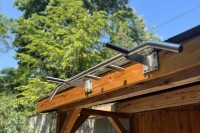
Pull-up bar H4 under a balcony


The best exercises on the pull-up bar H4
The following section presents 7 exercises that are possible on the pull-up bar H4. The description focuses on the essentials. Selected exercises can also be seen in the embedded videos.
Pull muscles / Pulling exercises
#1 Classic pull-ups (pull-ups, chin-ups)
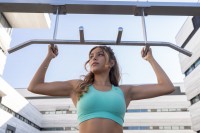
For a classic pull-up, the pull-up bar is gripped with both hands, the arm and back muscles are engaged, and the body is then pulled upwards—first from the shoulders and then from the arms—until the chin is slightly above the bar. This position is held for 1-2 seconds. The body is then lowered slowly and in a controlled manner until the arms are fully extended.
Classic pull-ups are pulling exercises designed to strengthen the back or the entire upper body. They can be performed using various grip types and widths and combine exceptionally well with other exercises.
The two most common grip types are the overhand grip (pronated grip, meaning the back of the hands faces the user) and the underhand grip (supinated grip, meaning the palms face the user).
In most workouts and training sessions, classic pull-ups are predominantly performed shoulder-width apart using an overhand grip. However, gripping the bar can generally be executed at different widths, such as 110 cm, 60 cm, or 10 cm.
Pull-ups refer to classic pull-ups performed with an overhand grip. Chin-ups refer to classic pull-ups performed with an underhand grip.
#2 Negative pull-ups or pull-up holds in an underhand grip
Negative pull-ups: A jump from a normal standing position to the pull-up bar is executed so that the chin is slightly above or directly level with the pull-up bar. The position is held for 1-2 seconds. The body is then lowered slowly and in a controlled manner until the arms are fully extended. Finally, a jump from the pull-up bar back to the ground into a normal standing position is performed. Important: Full body tension must be maintained throughout the entire range of motion.
Pull-up holds in an underhand grip: The pull-up bar is gripped with an underhand grip (thumbs pointing outwards), and the legs are fully extended and pressed together. From this position, the body is pulled upwards until the chin is over the pull-up bar. This position is held for 1-2 seconds. The body is then lowered slowly and in a controlled manner. It is held briefly at the bottom of the movement path before being pulled up again until the chin is over the pull-up bar. Possible training unit: Perform as many pull-up holds as possible within one minute.
Negative pull-ups and pull-up holds in an underhand grip are ideal exercises for beginners. They are highly recommended if not a single classic pull-up can be achieved yet. Negative pull-ups can also be performed with an underhand grip.
#3 One-arm pull-up
The pull-up bar is gripped with one arm on a straight section using an underhand grip. The arm and back muscles are engaged. The upper body is then pulled up while simultaneously twisting towards the gripping arm. The twisting motion is initiated by the shoulder.
Note: If the one-arm pull-up is performed with the left arm, the body is twisted to the left during the upward pull.
Abdominal and core muscles
#1 Burpee pull-up (push-up-jump-pull-up combination)
Starting position: Normal shoulder-width stance.
Step 1: A squat is performed from a normal standing position so that the palms touch the floor.
Step 2: A jump from this position into a push-up stance is executed (jumping slightly upwards while simultaneously extending the legs backward until they are fully straight and the toes touch the floor).
Step 3: A jump from the push-up position immediately back into a squat is performed, followed by a leap upwards from the squat towards the pull-up bar. The pull-up bar is gripped with both hands during the jump, and the chin is pulled over the bar. This position is held for 1-2 seconds.
Step 4: The body is then slowly lowered until the arms are fully extended, followed by a jump back to the floor into the starting position.
The burpee pull-up combines several exercises (squats, push-ups, vertical jumps, pull-ups) into one fluid motion. The burpee pull-up (or burpees in general) is considered one of the best exercises in bodyweight training and calisthenics.
The burpee pull-up serves as an excellent method to determine or verify the current fitness level. The following evaluation can be used as a guideline:
-
8 or fewer burpees: poor
-
10 burpees: average
-
12 burpees: good
-
13 or more: excellent
#2 Leg raises on a pull-up bar
The pull-up bar is gripped shoulder-width apart using an overhand or parallel grip. The knees are raised upwards so that both legs and the upper body form a 90° angle. The legs are then lowered in a controlled manner.
Variation: The knees can also be pulled towards the chest to achieve a larger range of motion. The intensity is increased by lifting the legs straight rather than bent.
#3 Windshield wipers
The pull-up bar is gripped shoulder-width apart using an overhand or parallel grip. The legs are raised upwards until the body and the legs form a V-shape. The legs are then rotated alternately to the left and to the right (similar to the movement of a car's windshield wipers).
This exercise provides excellent stimulation for the oblique abdominal muscles. It can also be performed on dip bars.
#4 Front lever
The same starting position as for the windshield wipers is assumed. The legs are carefully lifted and fully extended until the upper body and legs form a straight horizontal line. This position is held for 2-8 seconds. The legs are then carefully lowered back to the starting position.
The front lever can also be performed very effectively on dip bars.
What is needed for effective fitness training: Time, fitness equipment, space, training plan, and training goal
For an effective home fitness training routine, only a little time 1-2 times a week, the right fitness equipment, some space, a training plan, and a training goal are required. How to choose all of these correctly and what needs to be considered is described below. Apart from the reference to the required space, the same naturally applies to training in a CrossFit box or a gym.
Training goal
Defining a training goal is not difficult. In the simplest case, it works like this: Assuming the intention is to improve general fitness. In this case, the training goal would be the improvement of general fitness.
Example of a training goal: Improvement of general fitness.
Why is a training goal needed? The rule in fitness is: No training without a training goal. A personal trainer always asks for the training goal first and creates a training plan based on it. If professionals always work based on training goals, this approach should be adopted generally. It is not complicated and only requires some basic knowledge about the biophysical processes in the body.
Training plan
If general fitness is to be improved, a possible training plan could look like this:
Complete general fitness training 1-2 times a week for about 1 hour each, ensuring that the physical limit is reached in 1-2 exercises.
Possible exercises would then be, for example: jumping jacks, jumping rope, squats, push-ups, prone rowing, burpees, all types of pull-ups (with and without assistance), crunches, leg raises, 30-45 minutes of running, cycling, or swimming.
The number and extent of the individual exercises can be determined individually. The intensity of specific exercises can also be set, changed, or refined over time. Warming up before every workout and stretching the muscles afterward is strictly recommended. This prevents injuries and promotes recovery.
A training plan consisting of one set with 5-10 repetitions, 2-3 exercise sets, and 3-5 different exercises works quite well.
The training goal is approached closer if the physical limit is reached at least 1-2 times during the workout. The more frequently this happens, the better for muscle growth. Only this stimulates the body to build muscle. Otherwise, the fitness level will merely be maintained rather than improved. The alternative with the same duration would be fewer exercises with many repetitions and low intensity. A 45-minute run, for example, would fall into this category.
Furthermore, proper nutrition and sufficient sleep are crucial for achieving the training goal. This allows the body to regenerate faster and be more resilient during the next training session.
Space
For a varied fitness workout, some space is naturally required. This can be a living room, a hallway, a study, a basement, or even a bathroom. If outdoor training is preferred, a terrace, a carport, or a garden often provides sufficient space.
On an area of at least 5 sqm or 1.5 m x 3 m, many exercises can already be performed. The area should at least allow for jumping rope, push-ups, or jumping jacks. 10 sqm and more are naturally better. Pacing back and forth between exercise sets is common to gather thoughts and mentally prepare for the next exercise.


Fitness equipment
For effective home fitness training, fitness equipment can initially be entirely omitted. Without prior training, the physical limit is reached quickly even without equipment. For example, the following can be tried: 10 push-ups divided into three sets, 10 burpees as one set, or 20 repetitions of prone rowing with the arms divided into four sets.
In the long run, any training without fitness equipment becomes monotonous or must be exceptionally well thought out to ensure a balanced full-body workout.
Based on experience, the following equipment has proven to be highly effective for general fitness training:
-
Jumping rope
Highly stable and minimalist pull-up bars and dip bars are available for fitness training, which can also be perfectly integrated into a living room without needing to be hidden from guests.

Time
To improve general fitness, training 1-2 times a week with a duration of about 1 hour each is perfectly sufficient. This amount of training will not create a bodybuilder, but it will definitely result in excellent fitness.
It is important that the training is done regularly. The body needs time to adapt to the new physical demands. The longer the training rhythm is maintained, the longer the achieved fitness level can be kept.
Training results are often visible faster in men than in women, sometimes after just the first 2-3 weeks. Generally, women need to train slightly more to achieve the same level of visible results.
When asking people who have been training or exercising regularly for years how they maintain their routine, the following answer is frequently given: Make fitness training a fixed part of everyday life, just like brushing teeth, showering, or bathing. It really is nothing more than that.
In the long run, it is therefore very helpful to establish a proper organization. This can be achieved, for example, by setting a fixed training time, creating a dedicated fitness corner, setting up a home gym in the living room, or building a small calisthenics park in the garden.
If this is not possible, a membership at a local gym or visiting a nearby calisthenics park can provide a great alternative.
Summary
A training goal, a training plan, some space for the workout, the right fitness equipment, and a little time 1-2 times a week are fundamental for effective fitness training. To ensure that the workout does not lead to any unpleasant surprises, warming up before the training and stretching the muscles afterward is essential. In addition, proper nutrition and adequate sleep must be prioritized.
What is the inner clearance between the tube and the ceiling?
The standard clearance to the ceiling is approx. 27 cm. Other distances can be ordered via the pull-up bar configurator.
Is mounting material included in the scope of delivery?
Yes and no, as it can be selected optionally. Mounting material can also be added to the shopping cart separately here.
Is there an optimal mounting height? How high above the floor should the pull-up bar hang?
Yes, ideally the pull-up bar should hang 30% above body height. In this case, the floor will no longer be touched while hanging. This means, for example, with a body height of 1.8 m, the pull-up bar should be mounted 2.34 m above the floor. Generally, the following formula applies: Ideal mounting height = body height * 1.3. If the ceiling height does not allow for this, the legs must be bent slightly.
What is the diameter of the pull-up bar?
The diameter of the pull-up bar at all grip areas is 3 cm or 30 mm.
Are the grip ends knurled, roughened, or polished?
None of the grip ends are knurled or roughened. They are brushed or ground with 240 grit. This means they are slightly rougher than a polished surface.
Can the pull-up bar also be mounted on wood?
Yes, using wood screws without dowels. The wood should be pre-drilled; for 8 mm screws, a 3 to 4 mm drill bit should be used. The wood or beam must be stable and provide a sufficiently large contact area for the mounting plates. To prevent the wood from splitting, the drill holes should be approximately 2 cm away from the edge.
Does the maximum load capacity of 500 kg include the weight of the person?
The maximum load capacity refers to the maximum possible weight that may be applied.
Is the pull-up bar suitable for outdoor use?
Yes, the pull-up bar can be used both outdoors and indoors, as it is made of high-quality stainless steel.
It should be noted that the pull-up bar must not be installed in a maritime atmosphere, i.e., near a sea or an ocean (e.g., the North Sea coast, the Baltic Sea coast, or the Atlantic coast).
Can the pull-up station also support a punching bag? Can the pull-up bar hold a punching bag additionally?
Yes, a punching bag can be easily attached to the pull-up bar. This can be done directly on the tube with a round sling and a carabiner. To prevent the punching bag from slipping, an eyelet can also be welded to the pull-up bar, see here: Pull-up bar with one or more eyelets.
Is the pull-up bar available in white or another color?
No, the pull-up bar is currently not available in white or any other color.
Can the ceiling-mounted pull-up bar also be mounted on a wall?
No, because it has bent ends. Reason: The bent ends would not be usable. Additionally, the pull-up bar could break out of the wall—especially if it is not a concrete wall—as the leverage forces could become too great. Overall, this application is not recommended.
Is the actual pull-up bar also made of solid steel?
No, the pull-up bar itself consists of a tube with a wall thickness of 2 mm.
Are the end caps made of the same metal as the pull-up bar and permanently welded?
No, the end caps are made of polyamide with a stainless steel look (coated plastic) and are therefore not permanently welded. They have the same color as the pull-up bar and are driven into the tube.
Technical Specifications
| Grip options | 5 grip variations (1 x bent ends; 2 x straight section: medium, narrow; 2 x parallel grip: narrow, wide) |
| Width x Depth x Height | 118 cm x 30 cm x 38 cm |
| Maximum grip width | 118 cm |
| Grip diameter | Ø30 mm |
| Distance between wide parallel grips | 60 cm |
| Distance between narrow parallel grips | 23 cm |
| Length of additional grips | 13 cm |
| Strut width and thickness | 50 mm and 8 mm |
| IPE steel beams | 100 mm, 120 mm, 140 mm, 160 mm, 180 mm, 200 mm, 220 mm, 240 mm, 270 mm, 300 mm, 330 mm, 360 mm, 400 mm, 450 mm, 500 mm, 550 mm, 600 mm, each with 2 drill holes |
| HEA steel beams | 100 mm, 120 mm, 140 mm, 160 mm, 180 mm, 200 mm, 220 mm, 240 mm, 260 mm, 280 mm, 300 mm, each with 2 drill holes |
| Diameter of drill holes for screws | Ø10 mm |
| Weight | 9 kg |
| Material | High-quality stainless steel (DIN 1.4301) |
| Surface | Brushed / ground (240 grit) |
| Load capacity | 500 kg (concrete ceiling) |
| Permissible use | Only suitable for general fitness training, calisthenics, and bodyweight exercises indoors or outdoors (indoor + outdoor). |
| Warranty | 20 years |
| Condition | New |
| Manufacturer | klimmzugstangen.de |
| Made in | Germany |
| Scope of delivery | 1 pull-up bar H4 (optional with mounting material) |