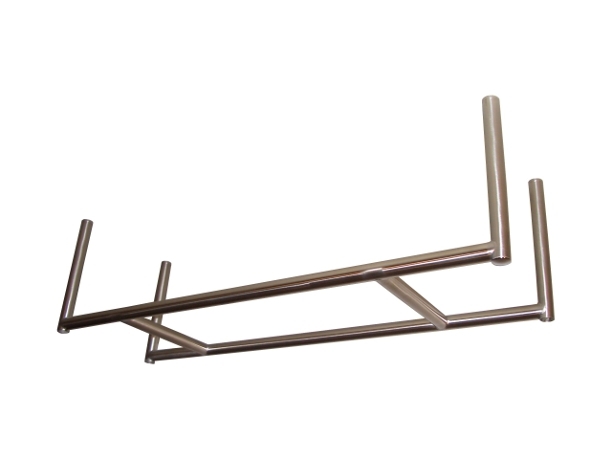

Frequently Asked Questions
An overview of the most frequently asked questions and the corresponding answers has been compiled here. If this list does not answer all questions, please send an email via the contact form.
Delivery Times and Payment
How long is the normal average delivery time?
The shipping time depends on the destination. In general, the delivery time is:
-
Within Germany: 1-3 business days.
-
Within the EU: 5-7 business days.
-
International: 10-14 business days.
Otherwise, the average delivery time of the item is specified in the product description. The specification refers to the time after the receipt of payment.
What payment options are offered?
Various payment methods are accepted, including:
-
Credit cards (Visa, MasterCard, American Express)
-
PayPal
-
Prepayment / Bank transfer
-
SOFORT Banking
A current and complete overview of the payment methods can be found via the link. An always up-to-date overview of all offered payment service providers is also displayed during checkout.
How long is the delivery time for a custom-made product?
For custom-made products, the delivery time is 2-3 weeks. The more complex the custom order, the longer the delivery time.
General Questions
Which pull-up bar is best to buy?
That depends on various factors, which are explained in detail on the page "Which pull-up bar to buy?". If needed, there is also a guide available, which contains further advice on purchasing pull-up bars as well as information on exercises, mounting, and other products.
Is klimmzugstangen.de for private or commercial customers?
Deliveries are made to both private and commercial customers. The prices are based on the effort required, not on the customer group.
Custom-Made Products
Are custom-made products possible?
Yes, custom-made products are possible. Many of the products are manufactured in-house, making it possible to adapt the pull-up bars to specific requirements or to realize an individual pull-up bar. The costs for custom-made products are based on the effort involved.
How much does a custom-made product cost?
Most modifications can be carried out for 0 - 100 EUR.
Is a custom-sized pull-up bar also possible?
Yes, custom-sized pull-up bars are also manufactured. For certain models, an individual length must be specified when ordering. Please check the website to see if the already offered custom-sized pull-up bars meet the requirements. If a suitable one is not available, please send an email and specify which modification and which dimension are needed.
Is there an optimal grip width for pull-up bars?
Yes, the optimal width of the pull-up bar depends on body height. To determine the optimal width, simply grab a folding rule at a width that feels comfortable (between the hands) and read the corresponding distance. If there is a significant deviation from 120 cm (standard dimension for all W- and D-models), the length of the tube should be adjusted.
What equipment is needed for a fitness room, besides a pull-up bar?
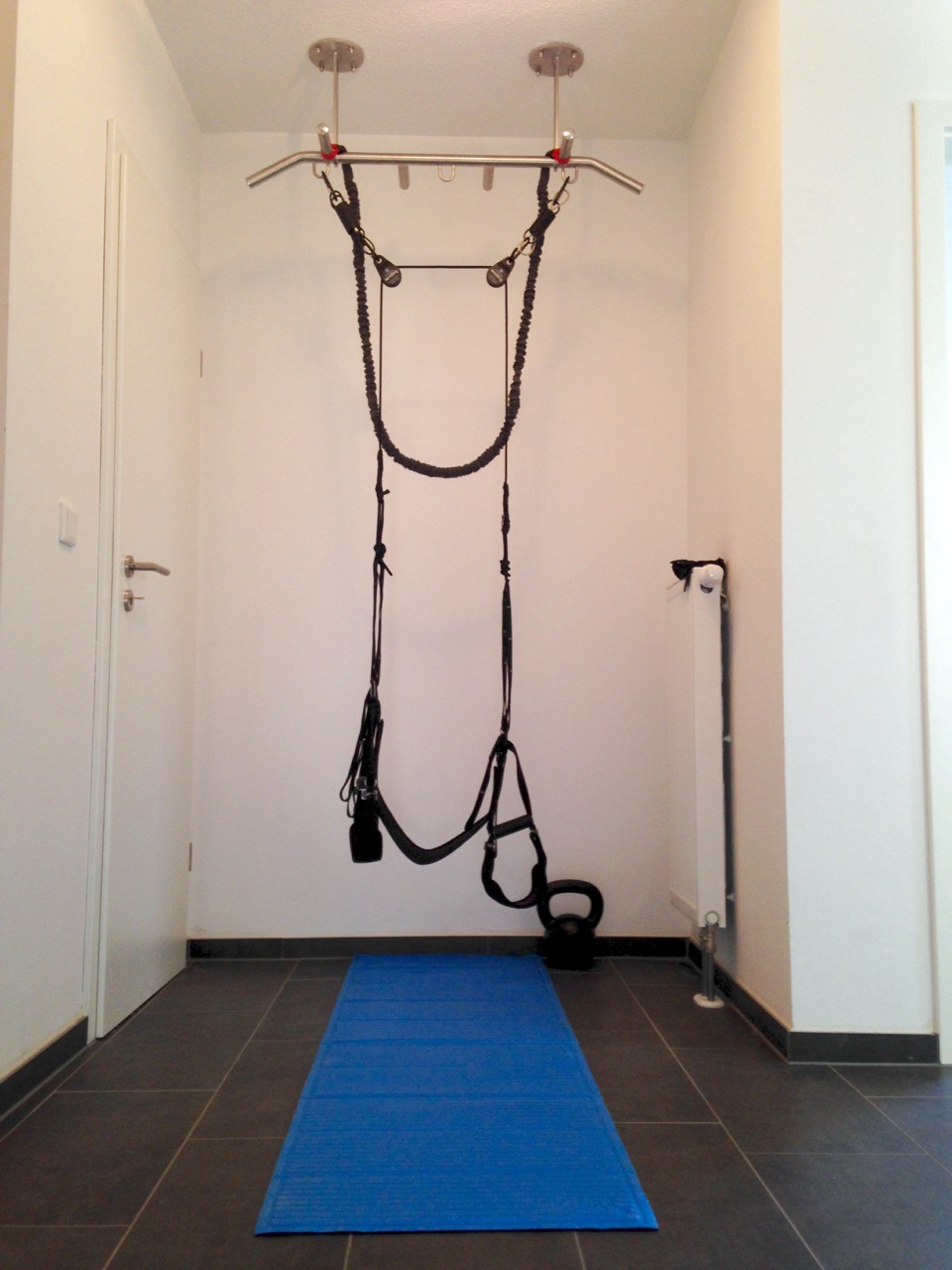
For a basic fitness room, a pull-up bar and an exercise mat are sufficient, see the picture below. In addition, a sling trainer is recommended, which can easily be attached to almost all of the models.
To which pull-up bars can sling trainers be attached?
Sling trainers can be attached to all models that are firmly mounted to the wall or ceiling.
Are the pull-up bars tested for safety?
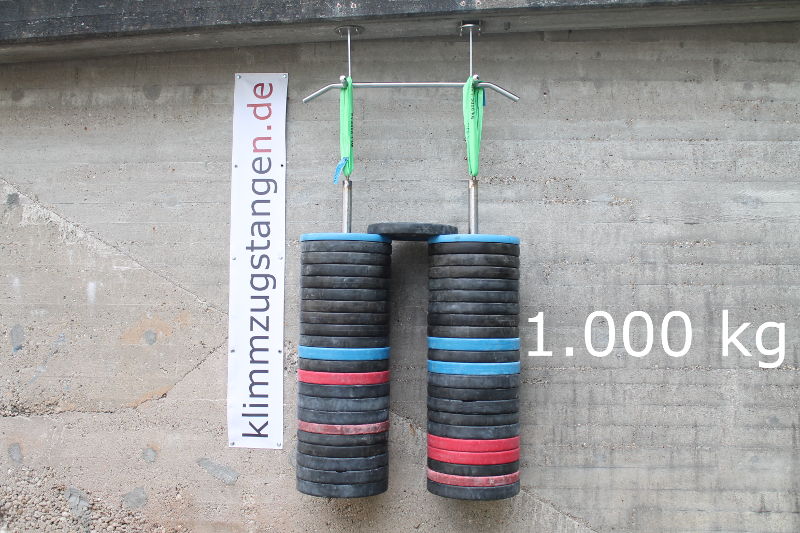
Yes, the pull-up bars have been tested for safety. The pull-up bars easily comply with the specified load limits as well as DIN EN 913. They were loaded with 1,000 kg and a load analysis was carried out using the finite element method. The result is that at the specified load limits, breakage can be ruled out with a "probability bordering on certainty".
Are pull-up bars from klimmzugstangen.de weatherproof?
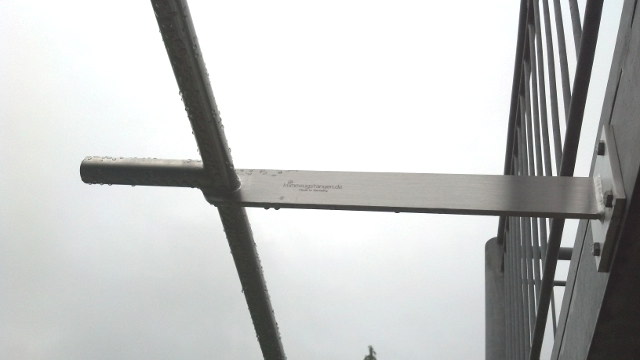
The pull-up bars are weatherproof. They are made of stainless steel (DIN 1.4301) and therefore do not rust. Other providers generally offer pull-up bars made of simple steel, which are not necessarily weatherproof.
How good is the grip on the pull-up bars?
The pull-up bars offer an excellent grip. The surface provides a secure and comfortable hold. For professional use of the pull-up bars, grip covers or training gloves are recommended.
How can the grip be improved?
The grip of the pull-up bars can be improved with grip covers or rubber grips. Grip covers for pull-up bars with open ends are available in the shop.
How tight do the rubber grips sit?
The rubber grips are dimensioned so that they can be easily slid onto the tube ends of the pull-up bars. Since the rubber grips are closed on one side, an air cushion is created when they are pulled on, allowing the grips to slide over the tube. When they are pulled off, however, a negative pressure is created, ensuring that the rubber grips are pulled against the tube.
How are the grip covers removed?
The rubber grips are best removed by blowing air into them to neutralize the negative pressure created during removal. Sometimes a small hole on the closed side also helps prevent the negative pressure from forming during removal.
How heavy are the pull-up bars?
The D- and W-models weigh approx. 8 kg. The E-models weigh approx. 3-4 kg, depending on the length. The L-models each weigh approx. 1.5 kg and the Dr. Dreh pull-up bar weighs approx. 3 kg.
Is viewing and pick-up possible?
Yes. In the Brühl industrial estate in 74834 Dallau, the products can be viewed, paid for, and taken away. Currently, there are no regular sales hours. Therefore, please arrange an appointment for viewing and pick-up first, preferably via the contact form.
Where can the instruction manual be found?
The respective operating and assembly instructions can be found in the relevant product description. For the W-, D-, E- and L-models as well as the dip bars and dip stations, the push-up grips, and the H1 brackets, the operating and assembly instructions are also available as a PDF.
Questions About Ordering and Shipping
Why is no order confirmation received by email?
There are several reasons why an order confirmation by email might not have been received:
-
An incorrect email address was entered during ordering (applies to approx. 95% of cases).
-
A confirmation email was received, but it ended up in the spam folder (applies to 4% of cases and usually to Google Mail accounts).
-
The email could not be delivered because the inbox is full or the mail server of the mail provider was unreachable (applies to 1% of cases).
Will there be notifications about the order status?
Yes. Information will be provided about every important status of the order. Depending on the shipping method, a tracking number will also be transmitted.
Can the order be changed?
Yes, but only as long as the order has not yet been shipped. Please note that processing is generally very fast, i.e., after receipt of payment by 2 p.m., the order will be made ready for shipping on the same day and shipped on the same or next business day.
Which parcel service is used for shipping the items?
The parcels are shipped with DHL or GLS. Small orders that fit in a letter are shipped with Deutsche Post as a merchandise shipment.
Can the order be canceled?
Yes, the order can be canceled as long as it has not yet been shipped. Please make contact as soon as possible via the contact form or by email.
Mounting
How is the optimal mounting height determined?
The optimal mounting height can be easily determined using the following formula: Body height * 1.3 = optimal mounting height of the pull-up bar. In general, the optimal mounting height for pull-up bars is when the horizontal tube, while standing on tiptoes, can no longer be touched with the fingertips. At this height, the floor will no longer be touched while hanging during the use of the pull-up bar. The mounting height can be freely selected for W-models and is predetermined by the design for D-models. For wall models, a distance of at least 25 cm between the ceiling and the pull-up bar must also be maintained to avoid contact with the ceiling.
What tools are needed for installation?
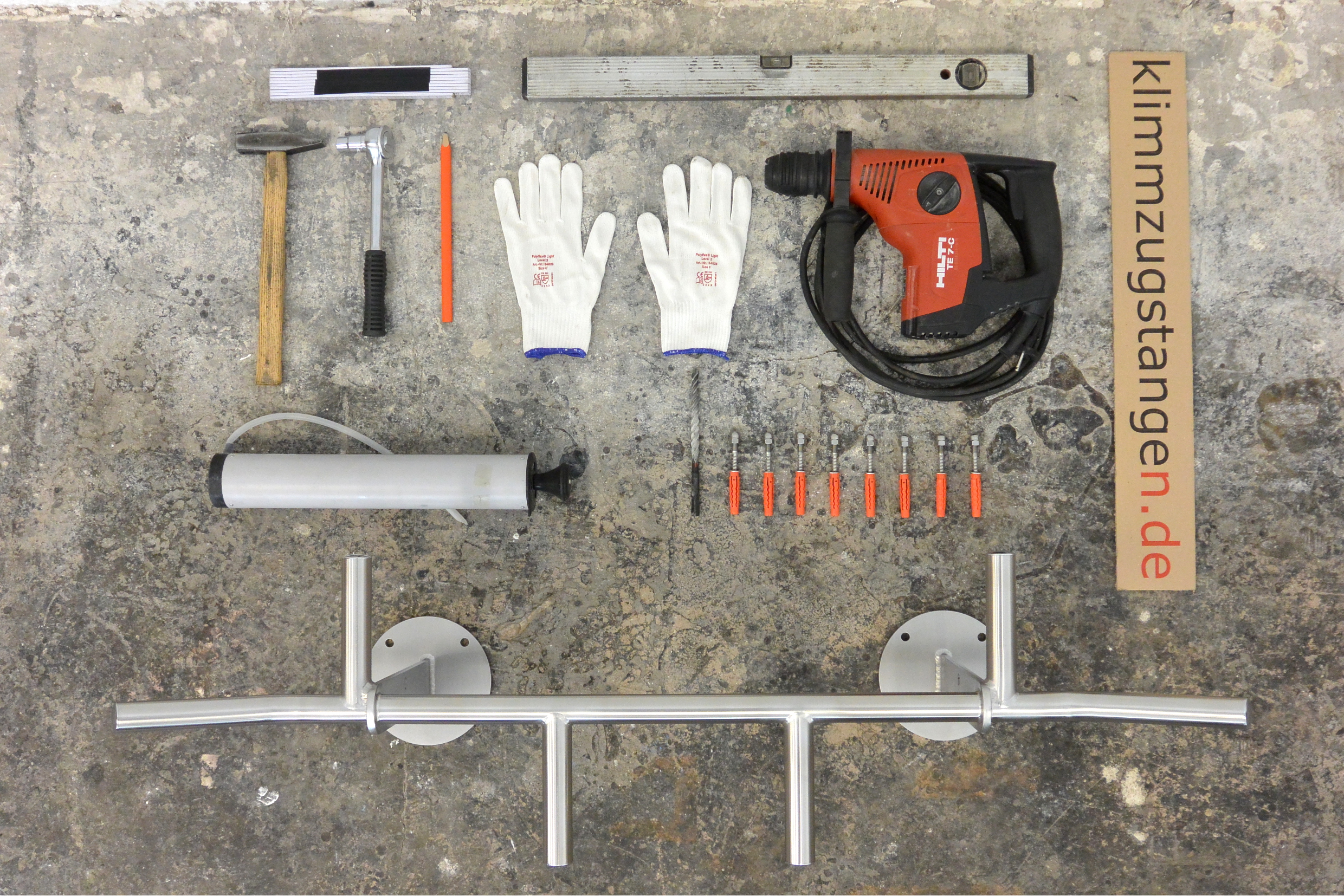
The following tools are recommended for installing a pull-up bar, along with a second person for support:
1 x hammer drill, 1 x drill bit 10 mm diameter, 8 x dowels (10 x 50 mm), hanger bolts (min. 8 x 60 mm), cap nuts (M8) and suitable washers, 1 x socket wrench with socket for cap nuts, 1 x spirit level, 1 x hammer, 1 x blow-out pump or vacuum cleaner, 1 x pen, 1 x gloves (1 pair).
Where is the best place to install the pull-up bar?
The pull-up bars are often installed in the bathroom, study, guest room, hallway, kitchen, or even the living room. Rooms that are used daily are recommended. The pull-up bars can also be installed in hobby rooms, basements, or on the balcony, but in these cases, they will automatically be used less frequently. If there is a fitness room, then the pull-up bar naturally belongs there, even if the fitness room is not used every day.
Is it allowed to install a pull-up bar in a rented apartment?
Yes, absolutely. However, when moving out, the apartment must be restored to its original condition. This means the drill holes must be filled and the necessary painting work carried out.
Is it possible to mount pull-up bars in old buildings?
Provided something heavy has already been successfully attached to the walls of the old building, then the pull-up bars will also hold well on those walls. It is recommended to check the stability of the walls very carefully, possibly by drilling a test hole. Mounting the pull-up bars is often not possible in old buildings because the walls and ceilings are frequently not stable.
Which dowels and screws are used for mounting?
Wood screws (galvanized or made of stainless steel) are very suitable for walls, ceilings, or wooden beams. Wood screws here refer to all screws that have a slightly coarser thread. A screw length of 60 mm is usually completely sufficient.
How is it mounted on a wooden beam?
When mounting on a wooden beam, the screws are simply screwed into the wood without dowels. However, all locations must be pre-drilled beforehand, otherwise, the screws cannot be screwed in.
How is it mounted on a wall/ceiling?
The pull-up bars are best attached to a wall or ceiling using hanger bolts and dowels. Normal nylon dowels can be used for this. Excellent mounting material for installing the pull-up bar is available in the shop, already assembled as a set.
Can pull-up bars also be installed theft-proof?
Yes, by using one or more screws with a security head during installation.
How are the hanger bolts removed from the wall?
This video shows how hanger bolts are unscrewed from the wall. The trick is very simple. Two nuts are screwed onto the hanger bolt and locked against each other. The open-end wrench is then applied to the rear nut and the hanger bolt is unscrewed. Done.
D- and W-Models
Dimensions of D-Models
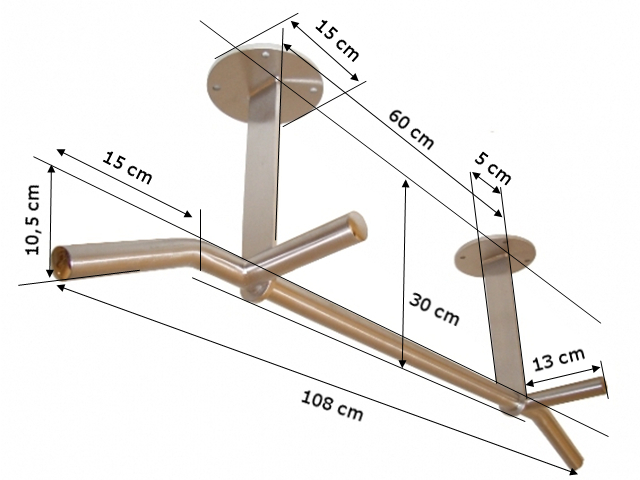
The following picture shows the most important dimensions of the D-models. The distance between the struts holding the tube is 600 mm in the center for all pull-up bars. The outer dimension between the struts is 608 mm, and the inner dimension is 592 mm.
Dimensions of W-Models
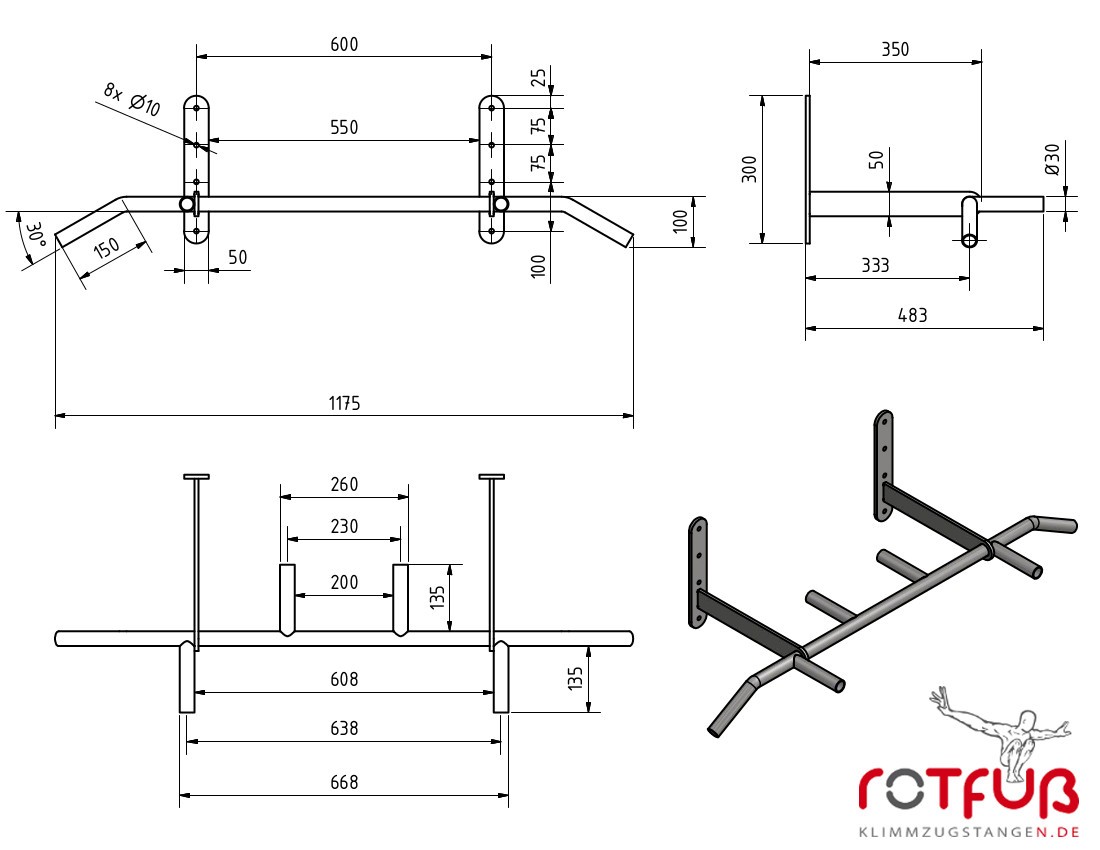
The following picture shows the most important dimensions of the W-models. The dimensions of the W- and D-models are identical, except for the size of the wall brackets and the length of the struts. The struts on the W-models are 350 mm long, rather than 300 mm as on the D-models.
Are the normal distances from the wall (35 cm) and the ceiling (30 cm) sufficient?
Yes, a wall distance of 35 cm is completely sufficient. Firstly, the wall is not touched, and secondly, the pull-up bar does not protrude too far into the room. For the ceiling pull-up bars as well, the distance of 30 cm from the ceiling is optimal. At this distance, the head does not touch the ceiling and there is enough free space for the legs.
Is it possible to increase or reduce the wall or ceiling distance?
Yes. The distance can be changed in 5 cm increments, from 20 cm to 85 cm. Please note: The distance to the ceiling should not be less than 25 cm. Otherwise, there is a risk of touching the ceiling during use. The distance to the wall should not exceed 40 cm. As the distance from the wall increases, the leverage forces increase, which can cause the pull-up bar to break out of the wall. Technically, the W-models can be manufactured with a distance of more than 40 cm from the wall. However, such pull-up bars are not recommended. Please note: The distance is always measured to the tube, including the tube diameter. The clear distance between the tube and the wall or ceiling is therefore 3 cm less.
What must be considered when mounting a pull-up bar?
Pull-up bars can only be installed on stable walls or ceilings. Normal walls made of bricks or ceilings made of concrete are generally stable. Wooden beams are also very suitable for mounting the pull-up bars. The wooden beam must, of course, also be sufficiently stable. If the ceiling is made of clay or is suspended, mounting directly on the ceiling is not possible.
Can pull-up bars also be mounted on drywall (plasterboard walls, etc.)?
No, pull-up bars cannot be mounted on drywall (e.g., made of plasterboard). These walls are not stable and cannot withstand the pull-up bars.
How difficult is it to mount a pull-up bar?
Medium. Being a qualified craftsman is not necessary, but a little manual skill is required. It is always recommended to enlist a second person for the installation and to plan one hour for the mounting. If it might be helpful, a video on mounting a pull-up bar was created a few years ago, which might assist.
Are wall-mounted pull-up bars a fully-fledged alternative to ceiling models?
No. The ceiling pull-up bars offer the greatest freedom of movement, extending 360° around the pull-up bar. With wall-mounted pull-up bars, only 180° is usable. If there is a good mounting location for both the ceiling and the wall, then it is best to choose a pull-up bar for the ceiling.
Is mounting on a brick wall or concrete wall possible?
Yes. The pull-up bars can be very well attached to a brick or concrete wall using normal screws and dowels.
How large is the shipping package?
The package for the pull-up bar models D and W (as well as for models G, B, P, and S) has the standard dimensions of 510 mm x 330 mm x 1190 mm (height x width x length).
How heavy is the package?
The weight of the packages containing pull-up bar models D and W (as well as models G, B, P, and S) is generally around 9 kg. Depending on the model, the actual weight is approximately 200 to 500 grams lighter or heavier. Specifically, the weight differences arise from the specific features of each model, such as: the number of additional grips, the length of the cross struts, and the shape of the plates at the end of the cross struts.
E-Models
Difference between E1, E2, E3, and E4 Models
-
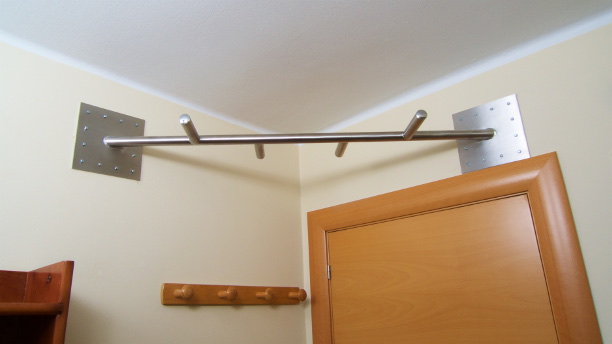
The E1 model is intended for a 90° corner. The brackets are welded at an angle to the pull-up bar E1, i.e., the E1 model only fits in a 90° corner and not in any other mounting location. The tube on the E1 model has a length of 116 cm.
-
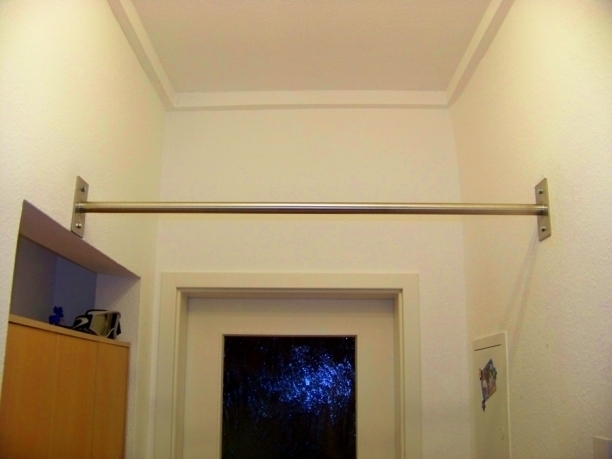
The E2 model can be mounted between two walls, beams, or struts. The E2 models are best suited for a hallway or corridor.
-
The E3 model is the detachable version of the E2 model. This means that with this model, the tube can be taken out of the U-brackets and put back in again.
-
The E4 model is the detachable version of the E2 model with protection against twisting of the tube. On the E4 model, the tube is welded to two rectangles rounded at the bottom and then placed in the U-brackets. This prevents the tube from spinning.
What is the maximum length of the E-models?
The maximum length of the E1 and E2 models is 200 cm. The brackets of the E1 and E2 models are 4 mm thick each. The brackets of the E3 model are 8 mm thick each. The total length of the E-models is equal to the overall length, including the length of the tube and the thickness of the wall brackets.
Can additional grips be welded onto E-models?
Yes. Additional grips (two or four) can be welded to the E1 or E2 model. Unfortunately, this is not possible with the E3 model, as the tube of this model is not permanently connected to the wall.
Why must 3 mm be deducted from the measured length for the hallway pull-up bar?
3 mm must be deducted because the pull-up bar for the hallway must always be shorter than the actual distance between the walls. Otherwise, there is a risk that the bar will be larger than the diagonal of the hallway and therefore cannot be brought into a horizontal position.
Can sling trainers be attached to the E-models?
Yes, sling trainers can be attached to all of the E1 and E2 models, because with these pull-up bars the tube is fully welded to the wall brackets. A sling trainer can also be attached to the pull-up bar E3 (the detachable version of the E2 model). Caution is advised here, however, as the tube of the E3 model is not permanently connected to the wall brackets and could possibly spin during use.
Are muscle-ups, kipping pull-ups, or toes to bar (TTB) possible on E-models?
Yes, but only on the pull-up bar E2 and on the pull-up bar E1. Muscle-ups, kipping pull-ups, or toes to bar (TTB) are not possible on the E3 model. Please note that a special pull-up bar for muscle-ups is available, which has a straight pull-up bar and a wall distance of 80 cm.
Is the tube on the pull-up bar E3 secured against twisting?
No. The tube on the E3 model is not secured against twisting. The tube is merely braced between the walls with the help of blanking plugs. The pull-up bar E3 is intended for basic pull-ups. During normal execution of pull-ups, the tube does not twist. With strong swinging, this cannot be ruled out due to the design.
The tube on the E3 model twists much too easily. What to do?
Simply place a small round piece of felt (e.g., a self-adhesive felt pad) between the tube and the wall. This braces the pull-up bar better between the walls and secures it more effectively against twisting.
Can the E2 or E3 model also be mounted in a door?
Yes. That is possible if the door frame is made of metal or sturdy wood and the masonry is located directly behind the door frame. Note that the screws for such a mounting should be long enough to bridge the gap between the door frame and the masonry. 100 mm long screws should generally be sufficient. 60 mm long screws (as offered as standard) would likely be too short. Please note that mounting in a door frame cannot be done without damaging the door frame. The E2 model and the U-brackets of the E3 model must always be screwed on. And that will not work without drilling into the door frame. A hole in the wall can be filled in. A hole in the door frame cannot be easily repaired.
Should the mounting holes for the E2 be next to each other or one above the other?
When mounting the E2, the holes can be placed either next to each other or one above the other in the wall. It is recommended to place the mounting holes next to each other, i.e., horizontally. This alignment has no effect on the use of the pull-up bar. Depending on the mounting location, however, mounting holes placed one above the other would also be appropriate.
When does a pull-up bar E2 make sense?
If a simple pull-up bar is needed and the hallway is max. 200 cm wide, then purchase the pull-up bar E2. The E2 model is a very simple pull-up bar. Nevertheless, it is suitable for many exercises. A sling trainer can also be very well attached to the pull-up bar E2. The pull-up bar E2 can also make sense if the walls or the ceiling are not stable enough for a wall or ceiling pull-up bar. Here the E2 can be an alternative, because with this model shear forces act and not leverage forces/tensile forces as with a classic pull-up bar for the wall or ceiling.
L-Models
Can the pull-up bar L3 also be manufactured with curved ends?
Yes. The L3 model can also be manufactured and delivered with curved ends. If such a model is not found on the website, simply send a brief email.
Can the length of the L-models be changed?
Yes. The length of the L-models can be shortened or extended without any problems.
Can L-models be bent by one's own physical effort?
No, the L-models have a wall thickness of 2 mm. This guarantees more than sufficient stability.
Q-Models
How is the cuboid pull-up bar (the Q-model) mounted?
The Q-model is screwed to the ceiling with a total of four screws. The attachment is made via the four tubes extending to the ceiling. The tubes are open on one side. On the other side, the side facing the ceiling, slightly thicker discs are welded in. The screws are inserted into the open side of the tube using a ratchet with an extension, guided through the tube, inserted through the thick disc, and then screwed into the dowels. After screwing, the open sides of the tubes are closed with bright chrome-plated blanking plugs.