

The pull-up is considered the gold standard of bodyweight training. It's one of the best indicators of relative strength—the ratio of your strength to your own bodyweight. In this guide, we'll break down how to learn your first pull-up quickly and effectively, and then how to strategically increase your rep count.
The bottom line is this: with the right exercises, consistency, and proper equipment, the path to your first unassisted pull-up is achievable at any age, for men and women alike.
The Foundation: Why a Good Pull-Up Bar is Crucial
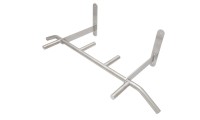
Before we dive into training methods, we need to get the basics right. A flimsy, wobbly doorway bar doesn't just kill your confidence, it wrecks your form. A stable, high-quality, mounted pull-up bar is an investment in your safety and your success. It allows for clean execution and often provides different grip variations (narrow, wide, neutral, parallel) to vary the stimulus and target specific muscle groups more effectively. For the serious goal of mastering pull-ups, it's non-negotiable.
The Core Principles of Progress:
-
Progressive Overload: This is the most fundamental principle of strength training. Your body only adapts when the stimulus is strong enough and increases over time. This means you have to continuously push yourself to do more: one more rep, a slower eccentric phase, or a lighter resistance band.
-
Consistency Over Intensity: Regularity is key. To ensure proper recovery, 2-3 structured training sessions per week are always more effective than one single, excessive workout.
-
Recovery is Growth: Muscles don't grow during the workout; they grow in the rest periods afterward. Never underestimate the power of adequate sleep (7-9 hours), proper nutrition, and planned rest days.
Phase 1: The Road to Your First Clean Pull-Up (LEARN)
If you can't do a pull-up yet, start with these foundational exercises. Don't skip any steps; each one builds on the last.
The Key Exercises for Learning Pull-Ups:
-
Dead Hangs: Simply hang from the bar and hold the position for as long as possible. The goal is to build grip strength and shoulder stability. (3 sets, max hold time)
-
Scapular Pull-ups: Hang from the bar with both hands, arms fully extended. Now, pull your shoulder blades down and together (and only your shoulder blades!). This will move your body up just slightly and actively engage your lats. (3 sets, 10-15 reps)
-
Inverted Rows (Australian Pull-ups): Use a lower bar (or a sturdy table). The more horizontal your body is, the harder the exercise. This builds fundamental horizontal pulling strength. (3 sets, 8-12 reps)
-
Negative Pull-Ups: The most important exercise! Jump up (or use a chair) so your chin is over the bar. Then, lower yourself down as slowly and with as much control as possible (aim for 5-8 seconds). Building this eccentric strength is the foundation for the concentric (pulling up) movement. (3 sets, 4-6 reps)
-
Banded Pull-Ups: A resistance band takes some of your bodyweight off your hands, allowing you to practice the full range of motion. Start with a thick band and work your way down to thinner ones. (3 sets, 6-10 reps)
Pro-Tip: Isometric Holds
This is an often-underestimated method. Use a band or a jump to pull yourself into a specific point in the pull-up motion (bottom, middle, or top) and hold that position statically for 5-15 seconds. This builds tremendous strength in the toughest parts of the movement.
Don't Forget to Warm Up and Cool Down
It's crucial to warm up before your workout. Spend a few minutes doing arm circles (2-3 mins per arm) and/or gently stretching your shoulders. Beginners often underestimate this step. At the end of your workout, it's also a great idea to stretch the muscles you've worked for about 5 minutes.
Beginner Pull-Up Pyramid Training Plan (2-3x a week, ~60 min each):
Here’s the beginner workout plan as a flowchart:
:
And here is the beginner workout plan in a table format:
| Exercise | Sets & Reps |
|---|---|
| Warm-Up | (5 mins) |
| Dead Hangs (Activation) | (2 x 30-45 sec) |
| Scapular Pull-ups (Activation) | (2 x 10 reps) |
| Inverted Rows | (3 x 10-12 reps) |
| Negative Pull-Ups | (3 x 4-6 reps) |
| Banded Pull-Ups | (3 x 6-10 reps) |
| Isometric Holds | (3 x 5-15 sec hold) |
| Cool-Down | (5 mins) |
Phase 2: From One to Many Pull-Ups (INCREASE)
Once you can do 1-10 clean pull-ups, you can use the following methods to keep progressing and get your numbers up faster.
Effective Methods for Increasing Your Reps:
In addition to standard pull-ups, add the following variations to your training plan:
-
High, Explosive Pull-Ups: Pull yourself up as fast and powerfully as possible, aiming to get your chin well above the bar and ideally touch the bar with your chest. The higher you pull, the better.
-
Advanced Pull-Up Variations: Incorporate different grips and styles like chin-ups (underhand grip), neutral-grip pull-ups, wide-grip pull-ups, isometric holds, Archer pull-ups (one arm pulls while the other assists straight), L-Sit pull-ups (with legs extended for extreme core work), or other variations.
-
Weighted Pull-ups: The classic way to increase max strength. Use a dip belt or a weight vest and start with small amounts of added weight. (4-5 sets, 4-6 reps)
Training Plan to Increase Pull-Ups (2-3x a week, ~15 to 60 min extra)
| Exercise | Sets & Reps |
|---|---|
| Warm-Up | (5 mins) |
| Explosive Pull-Ups | (3 x 3-5 reps) |
| Max Effort Pull-Ups | (1 set to failure) |
| Weighted Pull-Ups (e.g., 5kg/10lbs) | (3 x 5-8 reps) |
| Chin-Ups (Underhand Grip) | (4 x AMRAP, short rest) |
| Isometric Holds | (3 x 20-30 sec hold) |
| Cool-Down | (5 mins) |
Nutrition: The Fuel for Your Strength
Even the best training strategy will fall short without the right nutrients.
-
Protein: Aim for 1.2 to 1.8 grams of protein per kilogram of bodyweight per day (or about 0.5 to 0.8 grams per pound). Protein provides the building blocks for muscle repair and adaptation.
-
Calories: To build strength, a steep calorie deficit is counterproductive. Eat around your maintenance calories or in a slight surplus (approx. 150-250 kcal). If you want to lose weight, do it slowly to minimize strength loss.
-
Hydration and Micronutrients: Drink plenty of water. A diet rich in vegetables, fruits, and healthy fats will support all bodily functions and aid recovery.
The Right Warm-Up: Protecting Your Joints After 40
Especially for anyone over 40, a thorough warm-up isn't an option—it's a necessity to keep your joints, particularly the sensitive shoulder joints, healthy and high-performing. A good warm-up preps your nervous system, increases blood flow to the muscles, and lubricates the joints. Plan for 5-10 minutes.
-
Dynamic Stretching: Start with gentle, flowing movements. Arm circles (forward and backward, small and large) and shoulder rolls are ideal.
-
Rotator Cuff Activation: Use a very light resistance band for external and internal rotations. This wakes up the small, stabilizing muscles around the shoulder joint and protects them from injury during the main workout.
-
Light Activation Exercises: Before your main sets, perform a few Scapular Pull-ups or very light Inverted Rows to prime the target muscles and mentally prepare for the correct movement pattern.
Final Thoughts
Remember, the journey to your first pull-up depends on your current fitness level. It could take just a few days or a few weeks. If you're starting from near zero, it can feel like a mental marathon that requires a lot of patience and discipline. Stick with it!
Frequently Asked Questions (FAQ)
How many times a week should I train pull-ups to see progress?
For optimal progress, 2 to 3 targeted sessions per week is ideal. This gives your muscles enough time to recover and grow between workouts. Consistency is more important than the intensity of a single session. Listen to your body and allow at least 48 hours of rest for the same muscle group between workouts.
What is the best pull-up grip for beginners?
Beginners often find the most success with a neutral grip (hammer grip, palms facing each other) or an underhand grip (chin-up grip, palms facing your body). These grips engage the biceps more, which can make the movement easier at first. The classic overhand grip (palms facing away) is often the most difficult because it isolates the lats more.
Why am I not getting better at pull-ups despite training?
There could be several reasons: 1. Lack of Progression: You're doing the same exercises without increasing the intensity (e.g., using a lighter resistance band, holding negatives for longer). 2. Neglecting Foundational Work: Exercises like inverted rows, negatives, and dead hangs are critical for building the necessary base strength. 3. Inadequate Recovery or Nutrition: Muscles grow during rest. Make sure you're getting enough sleep and protein. 4. High Body Weight: Pull-ups are an exercise of relative strength. Reducing your body fat percentage can make achieving your first pull-up much easier.
Is it harder for women to learn pull-ups?
Due to anatomical differences in upper-body muscle mass distribution, it can be, on average, more challenging for women to achieve their first pull-up. However, that absolutely does not mean it's impossible. With the exact same structured training, patience, and focus on proper technique, women can master pull-ups just like men. The principles of building strength are the same for everyone. Learn more in our guide: Learning Pull-Ups as a Woman: A Beginner's Guide.
Sources: Cover image by Gordon Cowie on Unsplash